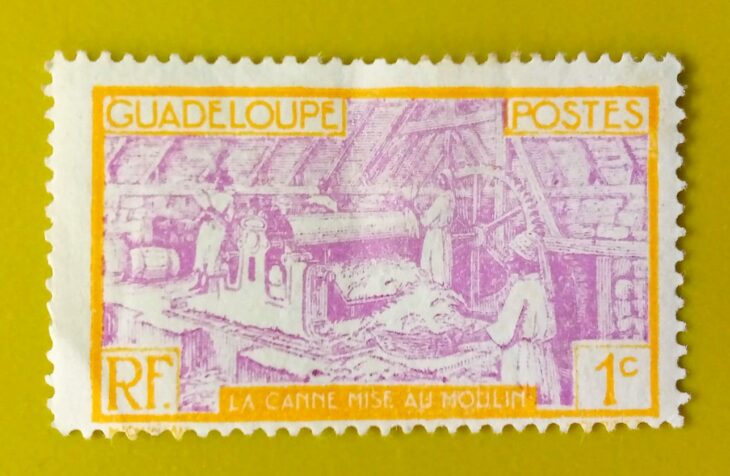
Issue: France Guadeloupe Sugar Mill 1928 1c Stamp
Type: Stamp
Number of Stamps: 1
Denominations: 1 C,
Issue Date: 1928
Issued By: France post
A Glimpse into Island Labor and Colonial Life:
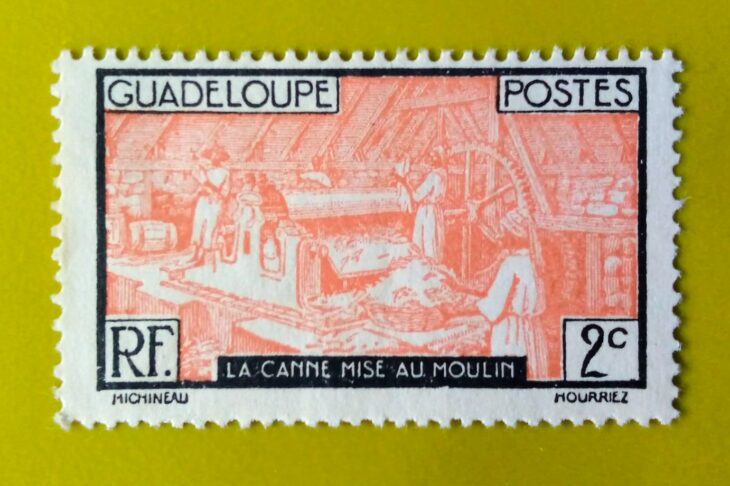
The 1928 1 centime stamp from Guadeloupe offers a detailed and respectful look into the island most vital industry sugar production. Titled La canne mise au moulinor The cane placed in the mill the stamp shows workers feeding sugarcane into a large mechanical mill. This image captures not only the physical labor but also the structured and enduring rhythm of plant action life that defined Guadeloupe economy for centuries. As a French overseas colony Guadeloupe daily life and industries were often featured on postage to represent both local identity and colonial productivity. The engraving is precise with careful attention to the details of the workers tools and architectural setting.
French Colonial Design in Everyday Postage:
Part of a broader definitive series released by France for its colonies the 1928 Guadeloupe 1c stamp falls into a category of stamps that combined practicality with messaging. These were not commemoratives but working stamps used on routine correspondence. However their artwork carried visual messages about colonial wealth order and economic value. The 1c denomination meant it was widely used perhaps more than any other stamp of its time. It bore the initials RF for République Française and was engraved by notable designers who elevated the scene from a basic illustration to a miniature work of art. The mill shown is likely symbolic representing many across the island that processed sugarcane into one of Guadeloupe key exports.
A Stamp of Labor Culture and Quiet Power:
Today this 1 centime stamp stands as both a postal relic and a cultural window. It tells the story of the workers whose labor fueled Guadeloupe sugar economy long before and after the stamp was issued. For collectors it’s a prized part of France colonial stamp legacy rich in historical context and artistic merit. It reminds us that stamps were never just about mail but also about identity place and the industries that shaped daily life. Through this small image we see the strength and rhythm of Guadeloupean life carved in ink and paper sent across oceans with every letter.