Blog

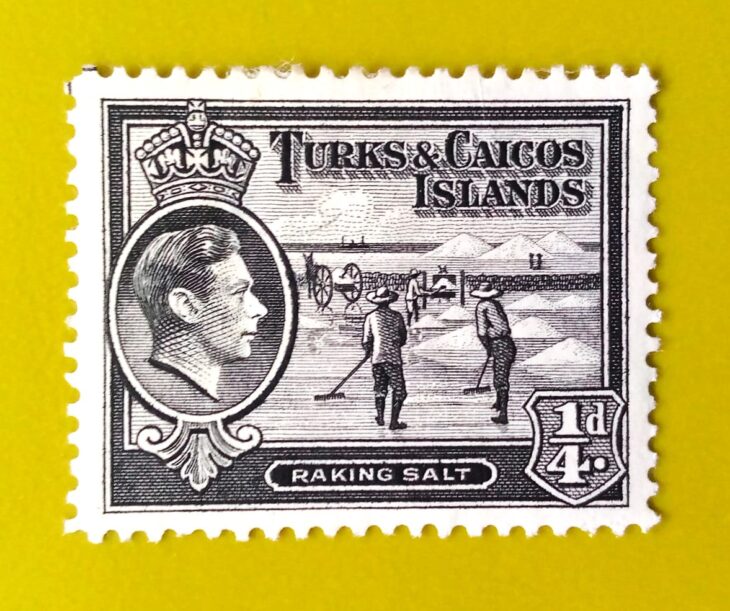
Turks and Caicos Islands Raking Salt 1938 Stamp

Issue:          Turks and Caicos Islands Raking Salt 1938 Stamp Type:        Stamp Number of Stamps:        1 Stamps Denomination:         1/4 d, Issue Date:         1938 Issued By:       Turks and Caicos Islands (British Overseas Territory)

Issue:          Turks and Caicos Islands Raking Salt 1938 Stamp

Type:        Stamp

Number of Stamps:        1

Stamps Denomination:         1/4 d,

Issue Date:         1938

Issued By:       Turks and Caicos Islands (British Overseas Territory)


Salt Industry at the Heart of Island Life:


The Turks and Caicos Islands Raking Salt stamp captures a key element of the islands colonial economy salt harvesting. Issued as part of the 1938 1951 King George VI definitive series the stamp depicts local workers raking salt in expansive salt pans, a common sight on the islands for over 300 years. Salt was once known as white gold in Turks and Caicos, and this image highlights the hard physical labor involved in its production. The stamp is not just a depiction of labor it’s a historical document showing how natural resources shaped daily life and international trade in a small British colonial territory. It reflects the rhythm of island life and the enduring connection between people and environment.


Royal Profile Over Colonial Industry:


In the upper corner of the stamp sits a formal portrait of King George VI framed in an oval symbolizing British authority and the colonial system in place at the time. It presented a visual narrative: the king calm gaze watching over productive loyal territories. The contrast between the formal royal portrait and the gritty sun drenched labor scene reflects the reality of colonial life where local industries powered the empire wealth. This design technique served not only a postal purpose but also communicated imperial order and pride. The stamp detailed engraving and balanced composition make it a visually compelling piece of philatelic art.


Collectible Echo of a Working Past:


The 1938 Raking Salt stamp is treasured by collectors of British colonial issues Caribbean history and labor themed philately. It is often sought in mint or used condition and full sets from the George VI series are particularly desirable. The stamp is more than just a collector item it’s a window into the socio economic story of Turks and Caicos. It preserves the memory of salt workers whose efforts defined the islands early identity and whose legacy lives on in this timeless little piece of history.
French Polynesia Ivory Coast Woman 1c 1936 Stamp

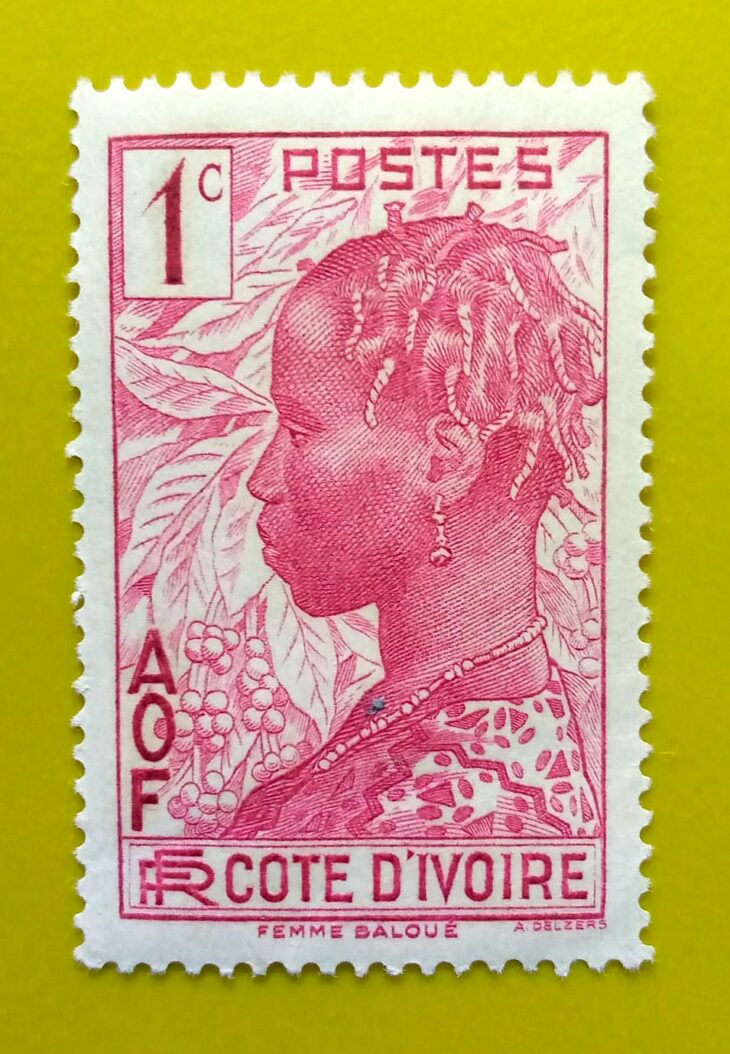
Issue:      France Polynesia Ivory Coast Woman 2c 1936 Stamp Type:       Stamp Number of Stamps:        1 Denominations:          1 C, Issue Date:          1936 Issued By:      France post

Issue:      France Polynesia Ivory Coast Woman 2c 1936 Stamp

Type:       Stamp

Number of Stamps:        1

Denominations:          1 C,

Issue Date:          1936

Issued By:      France post


Colonial Beauty with Cross-Continental Roots:


The 1936 1 centime stamp from French Polynesia featuring an Ivory Coast woman is a fascinating example of how the French colonial empire reused powerful imagery across its territories. Although this stamp was issued in the Pacific islands of French Polynesia the portrait is unmistakably African depicting a woman from the Ivory Coast dressed in traditional attire with a proud and composed expression. Her braided hairstyle and adorned jewelry reflect the elegance and cultural richness of West African heritage. Framed by the standard colonial design with the inscription Établissements Français de l’Océanie the image sends a message of unity and pride under the French flag. This blend of geographic identities makes the stamp unique in both purpose and symbolism.


One Face Many Messages Across the Empire:


The use of an African woman portrait on a Polynesian stamp was not accidental. France colonial policy often employed shared artwork and engraved designs across its overseas departments and colonies. The 1c denomination made this a widely used stamp for basic mailing purposes which meant the image traveled far and wide. To the French it reinforced the image of a vast and connected empire. To today viewers and collectors it opens a dialogue on how identity representation and aesthetics were managed during the colonial era. The engraved artwork is fine and deliberate using soft shadows and strong lines to create both realism and grace in the woman portrait. Though anonymous her figure stands with quiet authority becoming a symbol of strength across multiple cultures.


A Quiet Witness of Empire and Elegance:


More than just a low value stamp the 1c 1936 French Polynesia Ivory Coast Woman issue remains a small yet powerful testament to colonial history and artistic legacy. It reflects both the strategies of empire and the unexpected beauty that emerged through design. it offers a rare example of how a single image connected two distant parts of the world Africa and Oceania through ink and paper. The stamp lives on today as a collector gem and a reminder that behind every postal issue lies a deeper story of place people and purpose that still resonates through time.

French Polynesia Ivory Coast Woman 2c 1936 Stamp

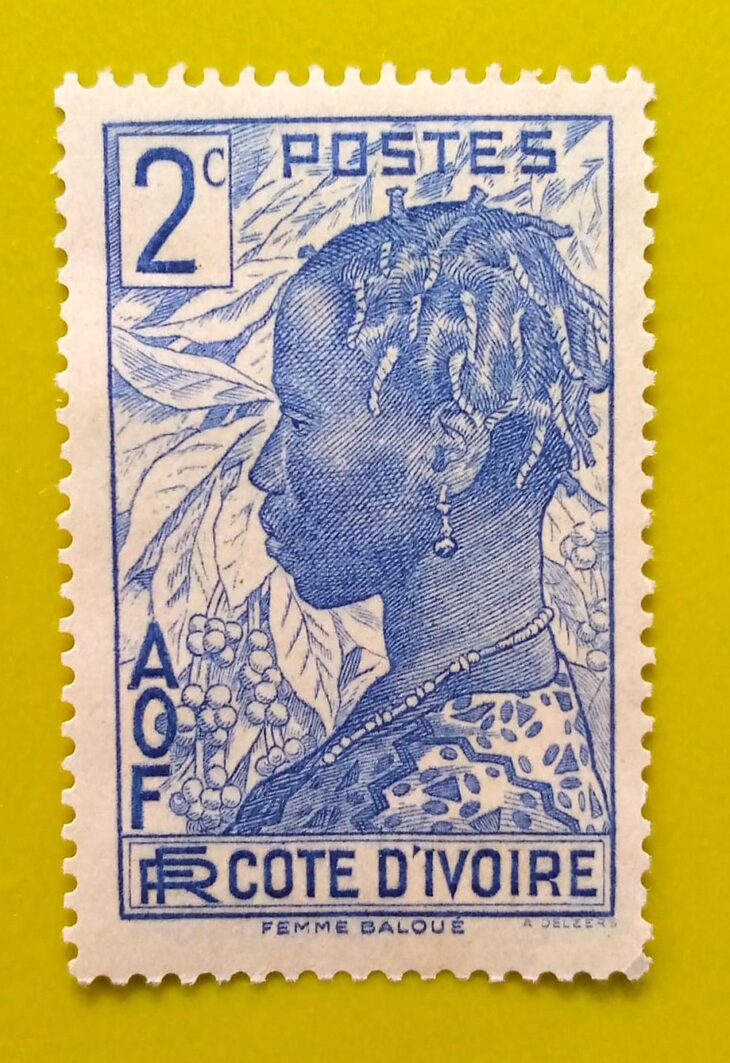
Issue:      France Polynesia Ivory Coast Woman 2c 1936 Stamp Type:       Stamp Number of Stamps:        1 Denominations:          2 C, Issue Date:          1936 Issued By:      France post 

Issue:      France Polynesia Ivory Coast Woman 2c 1936 Stamp

Type:       Stamp

Number of Stamps:        1

Denominations:          2 C,

Issue Date:          1936

Issued By:      France post


Grace and Strength in Colonial Portraiture:


The 1936 stamp featuring an Ivory Coast woman is a compelling piece of colonial era philatelic art that highlights the dignity and cultural richness of African identity within the broader context of the French overseas empire. Though issued under the name Établissements Français de l’Océanie (French Establishments in Oceania) this stamp draws on France larger colonial iconography which often used portraits of African women across multiple territories. The woman is depicted in traditional attire with her hair elegantly wrapped and adorned with jewelry symbolizing not just beauty but social status and heritage. Her posture is confident and upright a proud representation of West African grace printed for Pacific use a rare and fascinating example of cross colonial symbolism.


Artistry That Spanned Continents and Oceans:


Engraved with precision and framed in classic colonial design this stamp stands out for both its artistic finesse and its unexpected blending of geographic references. Though the subject is an Ivory Coast woman the stamp was used in French Polynesia demonstrating how France reused powerful imagery across its empire. The portrait is not anonymous it speaks volumes about strength identity and the layered complexities of being both admired and objectified in colonial visual culture. The engraving uses deep lines warm earth tones and balanced framing to create an image that feels both personal and official. The woman face is expressive and thoughtful not just a generic model but a symbolic ambassador of African presence in the colonial world.


A Symbol Beyond Its Time and Borders:


Today this stamp offers collectors and historians a meaningful glimpse into the colonial imagination and the ways in which France portrayed its subjects across multiple regions. Ivory Coast Woman stamp from French Polynesia is more than a postal item it is a cross cultural echo reflecting how imagery was reused to link colonies under one imperial vision. Yet beyond its intended message the strength and elegance of the woman endure as a reminder of real lives and stories behind the ink. It is a rare piece that bridges Africa and Oceania framed in tradition but still speaking to modern eyes with timeless humanity.

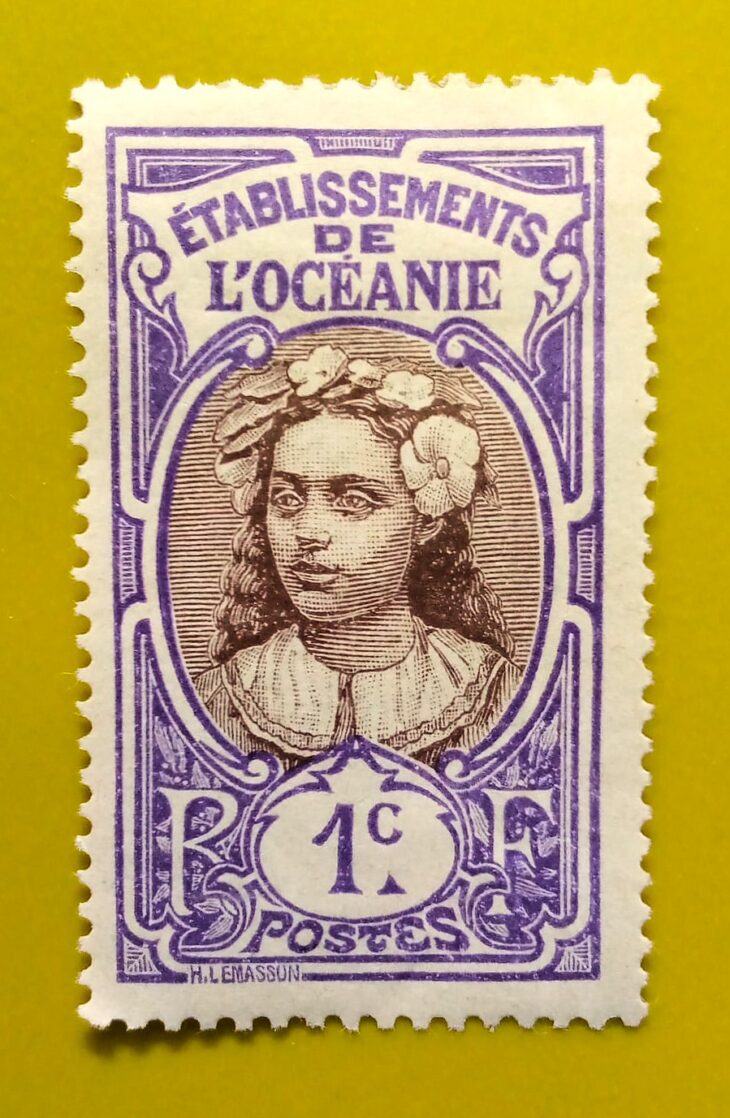
France Polynesia Tahiti Woman Oceania Establishments 1913 Stamp

Issue:      France Polynesia Tahiti Woman Oceania Establishments 1913 Stamp Type:       Stamp Number of Stamps:        1 Denominations:          1 C, Issue Date:          1913 Issued By:      France post

Issue:      France Polynesia Tahiti Woman Oceania Establishments 1913 Stamp

Type:       Stamp

Number of Stamps:        1

Denominations:          1 C,

Issue Date:          1913

Issued By:      France post


Island Beauty Framed in Colonial Elegance:


The 1913 stamp from French Polynesia featuring a Tahiti woman is a striking example of early 20th century colonial era art through philately. The woman depicted wears traditional attire with floral ornaments symbolizing the gentle grace and cultural richness of Tahitian life. Her portrait is set within a bold engraved frame marked with RF for République Française and the country name across the top.


Engraved Identity from the Pacific Shores:


This 1913 stamp was part of a definitive series used throughout French Oceania including Tahiti and surrounding islands. The denomination often appeared in centimes or francs with this stamp typically showing 10c to 25c values intended for basic letter rates. The engraving style used fine lines and deep shading to bring out the natural features of the woman shown reflecting both skill and intention. These stamps served more than postal purposes they were a controlled form of visual diplomacy blending colonial power with admiration of indigenous life. The result was a culturally significant and visually elegant issue that stood out from more generic European designs of the time.


From Local Portrait to Global Symbol:


The 1913 Établissements de l’Océanie stamp showing a Tahitian woman is more than just a means of postage it is a portal to a distant time and place. This stamp circulated during an era when colonial powers used postage not only to connect their empires but also to shape narratives about the lands they governed. The woman depicted is serene and strong a symbol of the Pacific indigenous grace. Her image traveled far beyond the shores of Tahiti carried on letters to France Europe and beyond subtly introducing the world to a culture few had ever seen. Her quiet gaze and traditional dress are not only a statement of identity but also a challenge to invisibility asserting presence in a world that often overlooked colonized people.

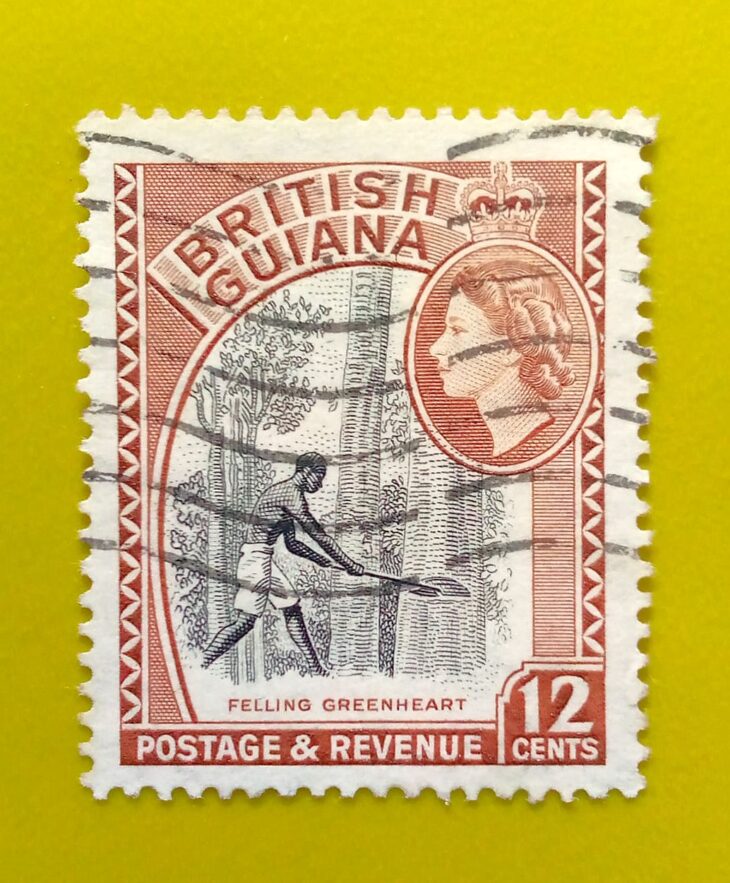
British Guiana (Guyana) Felling Greenheart 1954 Stamp

Issue:          British Guiana (Guyana) Felling Greenheart 1954 Stamp Type:        Stamp Number of Stamps:        1 Stamps Denomination:         12 c, Issue Date:         1954 Issued By:       British Guiana (British Colony, now Guyana)

Issue:          British Guiana (Guyana) Felling Greenheart 1954 Stamp

Type:        Stamp

Number of Stamps:        1

Stamps Denomination:         12 c,

Issue Date:         1954

Issued By:       British Guiana (British Colony, now Guyana)


Colonial Industry in Natural Forests:


The British Guiana Felling Greenheart stamp highlights one of the colony most valuable natural resources greenheart timber a durable hardwood native to the dense rainforests of the region. Issued as part of the 1954 definitive series under British colonial rule the stamp features a vivid image of laborers cutting down a massive greenheart tree surrounded by tropical vegetation. With Queen Elizabeth II portrait positioned prominently the design visually connects local labor and global authority in one powerful scene.


Resource Economy Under British Crown:


At the time of this issue British Guiana was a crown colony whose economy depended heavily on the export of natural resources like bauxite sugar and timber. The greenheart tree native to the tropical forests of Guyana became a symbol of economic potential and environmental abundance. The image on the stamp depicts workers using axes and saws to fell the towering tree a symbol of productivity and colonial enterprise. The design tells a dual story one of natural richness and the other of systematic exploitation for global markets.


Valued Scene of Labor and Land:


The British Guiana 1954 Felling Greenheart stamp is a significant collectible for those interested in forestry colonial industry and South American history. Its detailed engraving and strong thematic message make it a standout in the series. Collectors often seek complete sets from the 1954 issue and stamps in mint or fine used condition are prized.

French Polynesian Girl Playing Guitar 1958 Stamp

Issue:      France Polynesian Girl Playing Guitar 1958 Stamp Type:      Stamp Number of Stamps:        1 Denominations:          0.10 F, Issue Date:         1958 Issued By:     France post 

Issue:      France Polynesian Girl Playing Guitar 1958 Stamp

Type:      Stamp

Number of Stamps:        1

Denominations:          0.10 F,

Issue Date:         1958

Issued By:     France post


Island Melody in a Moment of Stillness:


Stamp from French Polynesia showing a local girl playing a guitar is a peaceful and captivating image that reflects the spirit and soul of island life. The stamp captures a timeless moment not only of music but of cultural pride and everyday beauty. With a warm color palette and fine engraved lines it gives an artistic portrayal of Polynesian tradition. This stamp does more than represent mail it sings softly of heritage rhythm and the relaxed lifestyle that defines the Pacific islands.


A Graceful Scene from the French Overseas Realm:


Issued under the French colonial administration in the Pacific this 1958 stamp belongs to a series that aimed to highlight local life in France overseas territories. French Polynesia known for its unique blend of French influence and Polynesian identity was often represented through images of nature culture and people. The image of the girl playing guitar was both authentic and idealized showing the balance between leisure and tradition. At a time when stamps were carefully chosen to represent the face of a place this design stood out for its intimacy and calmness. The stamp includes the country name and denomination alongside the elegant engraving which was common in mid-century French colonial issues.


From Music to Mail a Message of Harmony:


The French Polynesian Girl Playing Guitar stamp is a small but powerful piece of art and storytelling. It’s a stamp that travels far beyond its borders sharing a glimpse of Polynesian culture with the world. Whether used for everyday letters or preserved in collections it represents more than just a value it carries an emotional and visual tune. The guitar a symbol of both local and global music culture acts as a bridge connecting the island to the rest of the world. Through soft lines and a quiet pose this stamp endures as one of French Polynesia most poetic and memorable postal issues.

Germany Eifel Farmhouse For Welfare 1995 Stamp

Issue:         Germany Eifel Farmhouse For Welfare 1995 Stamp Type:        Stamp Number of Stamps:        1 Denominations:         80+40 pf, Issue Date:          1995 Issued By:        Germany Deutsche Post ( Deutschland ) 

Issue:         Germany Eifel Farmhouse For Welfare 1995 Stamp

Type:        Stamp

Number of Stamps:        1

Denominations:         80+40 pf,

Issue Date:          1995

Issued By:        Germany Deutsche Post ( Deutschland )


A Tribute to Rural Heritage in Modern Times:


>>>>The Germany Eifel Farmhouse stamp is part of a thoughtful series highlighting the country architectural traditions while supporting a noble cause. Issued by Deutsche Post in 1995 this stamp features a beautifully detailed illustration of a traditional farmhouse from the Eifel region a mountainous and forested area in western Germany. The Eifel farmhouse with its timber framing steep roof and rustic stone walls represents the historic rural lifestyle that once shaped the region communities. This issue was not just about honoring architecture but preserving memory and promoting cultural pride. It brings attention to the charm and resilience of countryside structures that have withstood centuries of weather and change becoming symbols of continuity in a fast changing world.


Architecture Meets Charity Through Postage:


>>>This stamp belongs to Germany For Welfare (Für die Wohlfahrtspflege) series a long running initiative where a portion of the stamp’s surcharge price is donated to charitable organizations. The 1995 edition featured farmhouses from different German regions combining philatelic art with social responsibility. These stamps served both to educate the public about regional heritage and to fund welfare services offering a stamp with both beauty and purpose. By purchasing these semi postal stamps users contributed to social aid programs while enjoying finely crafted imagery. The Eifel stamp stands out as a reminder that even through everyday mail compassion and culture can go hand in hand.


A Favorite Among Architecture and Charity Collectors:


Stamp for its fine detail cultural significance and charitable value. It’s especially favored among those who focus on architectural themes German regional history and semi postal issues. Mint condition stamps first day covers and full sheets from the 1995 welfare set are in high demand. Beyond its face value this stamp represents how postal art can preserve traditional craftsmanship and contribute to modern social good.

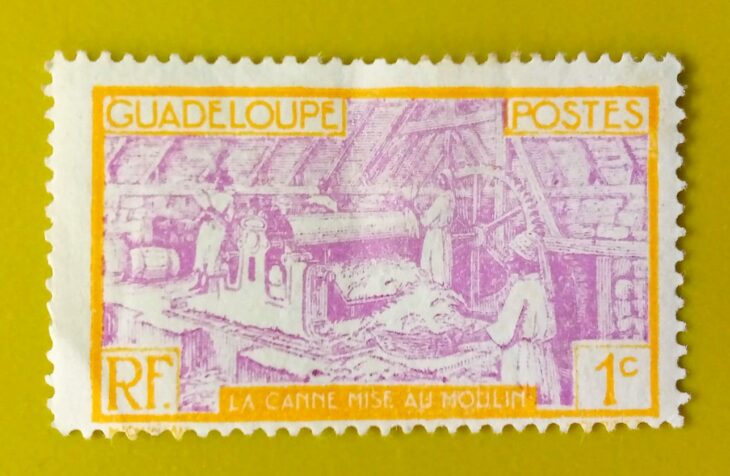
France Guadeloupe Sugar Mill 1928 1c stamp

Issue:      France Guadeloupe Sugar Mill 1928 1c Stamp Type:      Stamp Number of Stamps:        1 Denominations:         1 C, Issue Date:         1928 Issued By:     France post 

Issue:      France Guadeloupe Sugar Mill 1928 1c Stamp

Type:      Stamp

Number of Stamps:        1

Denominations:         1 C,

Issue Date:         1928

Issued By:     France post


A Glimpse into Island Labor and Colonial Life:


The 1928 1 centime stamp from Guadeloupe offers a detailed and respectful look into the island most vital industry sugar production. Titled La canne mise au moulinor The cane placed in the mill the stamp shows workers feeding sugarcane into a large mechanical mill. This image captures not only the physical labor but also the structured and enduring rhythm of plant action life that defined Guadeloupe economy for centuries. As a French overseas colony Guadeloupe daily life and industries were often featured on postage to represent both local identity and colonial productivity. The engraving is precise with careful attention to the details of the workers tools and architectural setting.


French Colonial Design in Everyday Postage:


Part of a broader definitive series released by France for its colonies the 1928 Guadeloupe 1c stamp falls into a category of stamps that combined practicality with messaging. These were not commemoratives but working stamps used on routine correspondence. However their artwork carried visual messages about colonial wealth order and economic value. The 1c denomination meant it was widely used perhaps more than any other stamp of its time. It bore the initials RF for République Française and was engraved by notable designers who elevated the scene from a basic illustration to a miniature work of art. The mill shown is likely symbolic representing many across the island that processed sugarcane into one of Guadeloupe key exports.


A Stamp of Labor Culture and Quiet Power:


Today this 1 centime stamp stands as both a postal relic and a cultural window. It tells the story of the workers whose labor fueled Guadeloupe sugar economy long before and after the stamp was issued. For collectors it’s a prized part of France colonial stamp legacy rich in historical context and artistic merit. It reminds us that stamps were never just about mail but also about identity place and the industries that shaped daily life. Through this small image we see the strength and rhythm of Guadeloupean life carved in ink and paper sent across oceans with every letter.

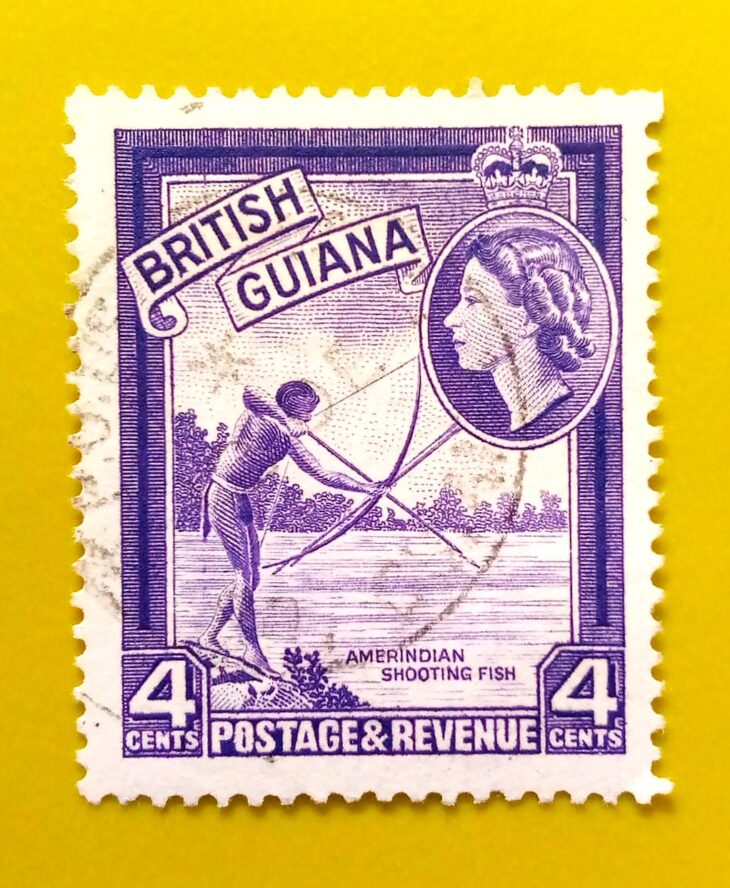
British Guiana (Guyana) Queen Elizabeth II Amerindian Shooting Fish 1954 Stamp

Issue:          British Guiana (Guyana) Queen Elizabeth II Amerindian Shooting Fish 1954 Stamp Type:        Stamp Number of Stamps:        1 Stamps Denomination:         4 c, Issue Date:         1954 Issued By:       British Guiana (British Colony, now Guyana)

Issue:          British Guiana (Guyana) Queen Elizabeth II Amerindian Shooting Fish 1954 Stamp

Type:        Stamp

Number of Stamps:        1

Stamps Denomination:         4 c,

Issue Date:         1954

Issued By:       British Guiana (British Colony, now Guyana)


Cultural Life Captured in Colonial Art:


The British Guiana Amerindian Shooting Fish stamp is a vivid portrayal of indigenous life in the lush rivers of South America. Issued during the reign of Queen Elizabeth II this stamp forms part of the 1954 definitive series showcasing the natural and cultural identity of the colony. The image features an Amerindian man using a bow and arrow to shoot fish a traditional fishing technique practiced by the indigenous peoples of the region for generations. Set against a backdrop of tropical river scenery the design emphasizes the deep connection between the people and their environment. With Queen Elizabeth II portrait placed at the upper corner the stamp reflects a colonial era where native imagery was blended with symbols of British sovereignty. The result is both ethnographic and imperial, a glimpse into local life framed by global rule.


Colonial Rule Meets Indigenous Identity:


In 1954 British Guiana was still a British colony located on the northeastern coast of South America known for its rich biodiversity and diverse cultures. This stamp was one of several issued to highlight the territory unique heritage and the choice to feature an indigenous fisherman reflects both cultural appreciation and political messaging. The visual contrast between the detailed Amerindian figure and the formal image of Queen Elizabeth II symbolizes the coexistence of traditional life with colonial administration. Though issued under British control the stamp subtly recognizes the significance of local customs and the vital role of indigenous communities in the colony identity. It also served a practical purpose for everyday mail spreading a piece of visual storytelling across the globe with every letter it accompanied.


Philatelic Treasure of Colonial Guyana:


The 1954 Amerindian Shooting Fish stamp is highly valued among collectors of British colonial issues, indigenous themes and South American philately. Its artistic composition historical context and connection to both native culture and monarchy make it a standout item in many collections. Mint condition versions and full sets from the 1954 definitive series are especially sought after. Beyond its postage value the stamp remains a lasting tribute to the traditional skills and natural harmony of Guyana original peoples during a time of political transition and global empire.

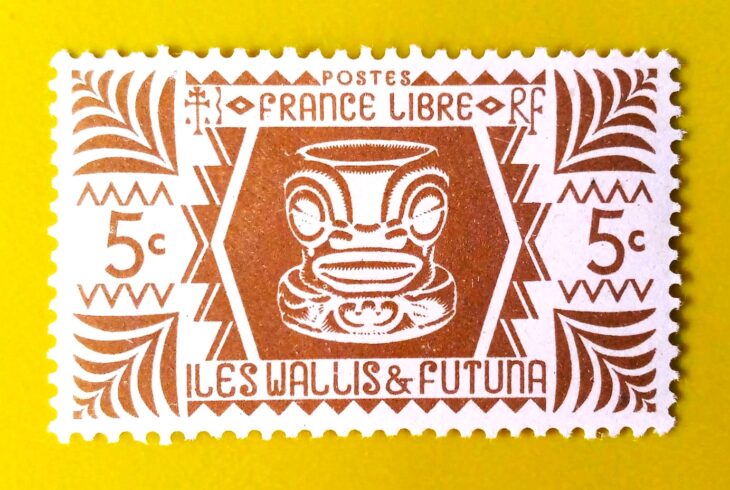
French Wallis & Futuna Islands 1944 5c Stamp

Issue:      France Wallis & Futuna Islands 1944 Stamp Type:      Stamp Number of Stamps:        1 Denominations:          5 c, Issue Date:         1944 Issued By:      France post 

Issue:      France Wallis & Futuna Islands 1944 Stamp

Type:      Stamp

Number of Stamps:        1

Denominations:          5 c,

Issue Date:         1944

Issued By:      France post


Pacific Loyalty to Free France:


Wallis & Futuna 5cstamp is a small but powerful symbol of wartime allegiance and colonial resilience. In 1942 Wallis and Futuna a remote French territory in the South Pacific formally broke ties with the Vichy regime and declared loyalty to Free France. The 5 centimes stamp originally part of a prewar colonial series, was reissued in 1944 with this bold overprint turning it into a miniature declaration of political identity. Though simple in appearance this stamp reflected a significant shift in allegiance during a global conflict. It connected a tiny Pacific island community with a much larger struggle for liberty national pride and the future of France.


Colonial Design Reimagined in Wartime:


Before the war Wallis and Futuna stamps often featured local motifs such as outrigger canoes, native scenery and French colonial symbols. The 5c denomination was commonly used for basic domestic mail and featured standard colonial artwork. In 1944 existing stock was overprinted with the words France Libre and a Cross of Lorraine the emblem of Free France. This reissue not only gave the stamp a new political meaning but also reflected the urgent wartime need to adapt and reuse materials. The overprint was more than a postal adjustment it transformed the stamp into a tool of propaganda and unity. It told every sender and receiver that Wallis and Futuna stood with democratic France even from across the ocean.


A Tiny Stamp with Historical Weight:


Stamp is a valued piece for collectors interested in Free France, wartime issues, and Pacific history. Its rarity is increased by the islands small population and limited postal circulation. Mint condition examples or covers with clear cancellations are especially prized. It’s a small relic of defiance and solidarity, carrying a legacy far greater than its size.