
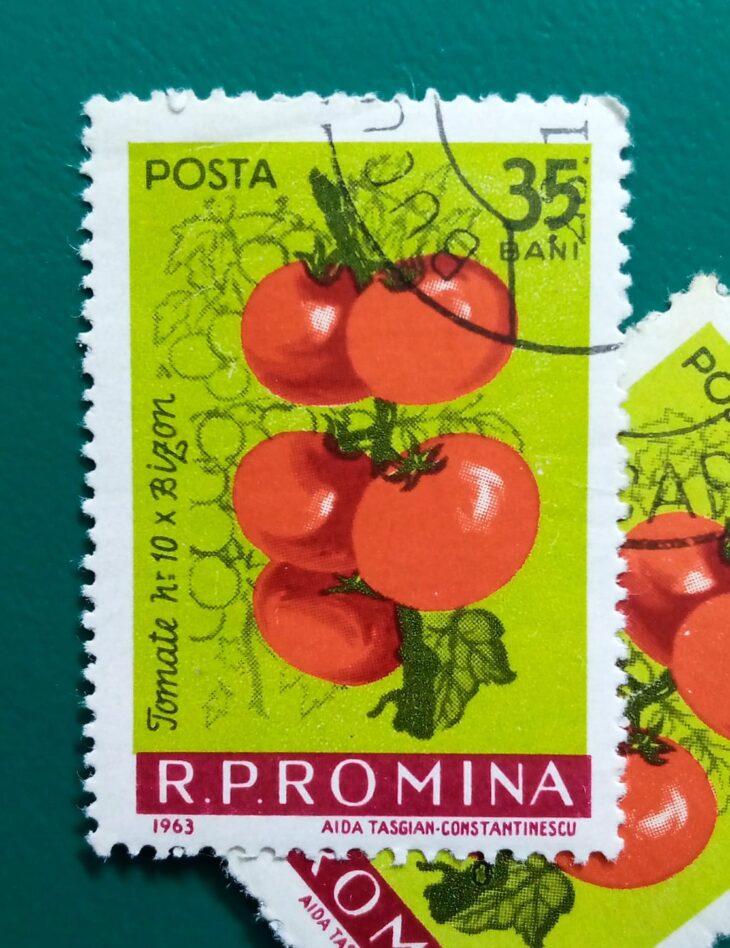
Issue: Romania Tomatoes 1963 Stamp
Type: Stamp
Number of Stamps: 1
Stamps Denomination: 35 B,
Issue Date: 1963
Issued By: Romania Post
Tomatoes Stamp:
In 1963 Romania issued a colorful postage stamp that featured ripe red tomatoes. This issue was part of a series dedicated to agriculture and food crops which were important symbols of the country economy and culture during that period. The tomato was chosen because it had become one of the most widely grown and valued vegetables in Romania. The design of the stamp is simple but striking showing the fruit in full detail and color. By releasing this stamp Romania celebrated its agricultural strength and the role of farming in feeding the people. Collectors today admire this stamp for its clear design and its link to everyday life.
Symbol Of Agriculture And Growth:
The tomato is more than just a vegetable in Romania. It is an essential part of the cuisine and a sign of agricultural progress in the twentieth century. By placing tomatoes on a postage stamp in 1963 the country highlighted the importance of farming and self sufficiency. It was also a way of honoring the hard work of farmers who produced food for the nation. Stamps like this connected the themes of nature labor and culture in one design. They reminded citizens that agriculture was not only about crops but also about national identity and pride. For Romania the tomato became a symbol of both nourishment and growth during a time of development.
Romania Agriculture:
The stamp remains popular among collectors who focus on agriculture themes food on stamp and Eastern European philately. It is admired for its artistic design and for the historical story it carries about farming in Romania. Many philatelists see it as part of a larger set of stamps that honored plants fruits and crops essential to daily life. Beyond its collectible value the stamp stands as a reminder that even ordinary items like tomatoes can have cultural and historical meaning. It shows how stamps can capture the beauty of simple things and preserve the memory of a nation’s connection to its land and food.
