
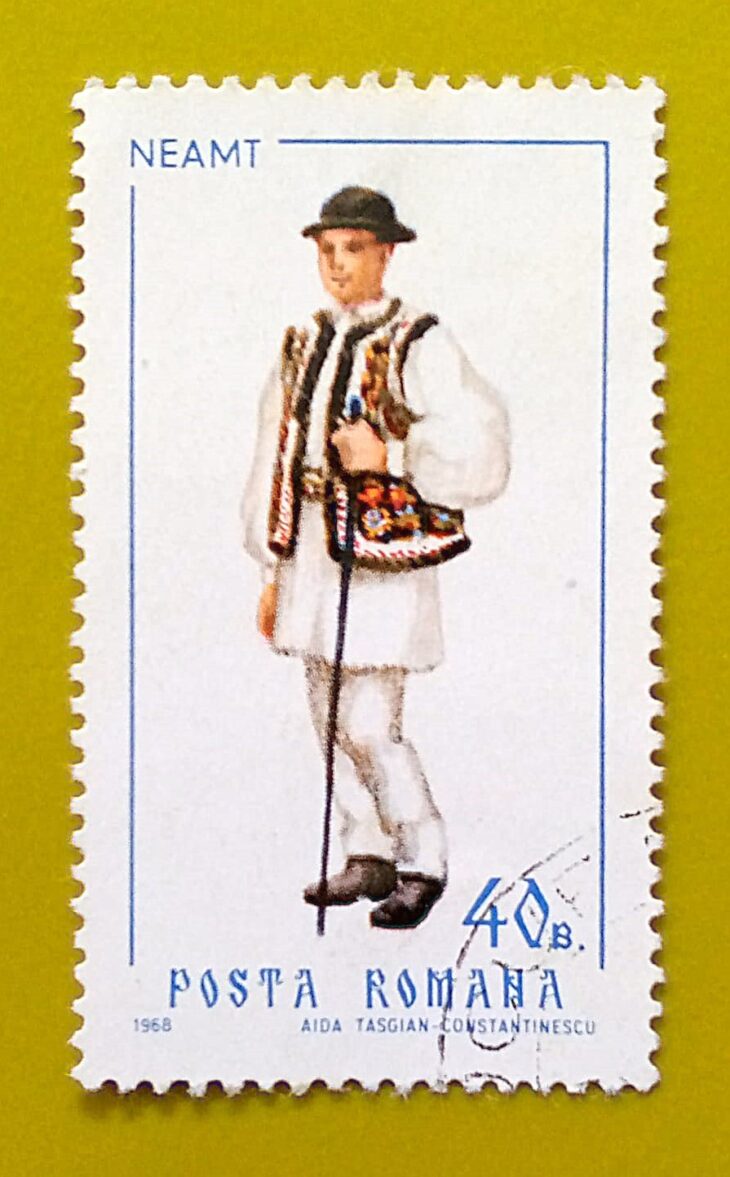
Issue: Romania Man Costume (Neamt) 1968 Stamp
Type: Stamp
Number of Stamps: 1
Stamps Denomination: 40 B,
Issue Date: 1968
Issued By: Romania Post
Traditional Costume Reflects Rural Heritage:
The Man Costume (Neamt) stamp highlights the cultural richness of the Neamt region through the detailed portrayal of traditional male attire. Located in the historical area of Moldavia Neamt is known for its monasteries forests and strong rural traditions. The man on the stamp wears a classic folk outfit which includes a white embroidered shirt wide belt woolen trousers and a sheepskin coat or vest depending on the season. Each part of the costume is handcrafted using local materials often passed down through generations. This stamp issued in 1968 is part of Romania national effort to preserve and celebrate regional identities by showcasing them through philately. It serves as a reminder of the connection between clothing heritage and everyday life in Romania past.
Cultural Identity Shown in Clean Artistic Design:
The illustration on this stamp is both simple and meaningful with clean lines and earthy tones that reflect the honest and hardworking nature of rural life in Neamt. The shirt often decorated with black or red embroidery stands out as a symbol of pride and craftsmanship. The man posture is upright and proud representing dignity and cultural strength. Traditional footwear known as opinci and a wool hat complete the ensemble giving the figure authenticity and historical accuracy. The background is usually kept minimal to highlight the costume itself allowing the viewer to focus on the textures patterns and details. Through this design Romania emphasizes the role of men in preserving customs and values through dress and tradition.
Folk Themes Resonate with Collectors and Historians:
This stamp is part of a beloved series that pays tribute to the diverse ethnic and regional costumes of Romania. For collectors it offers not only artistic beauty but also deep cultural significance. The Man Costume Neamt stamp is appreciated by those who value heritage ethnography and traditional art forms. It helps tell the story of how Romanians lived worked and celebrated in earlier times. As rural life changes and modernizes stamps like this one keep alive the memory of folk traditions that shaped national identity. It remains a treasured piece that connects history fashion and cultural pride in a lasting visual form.
