
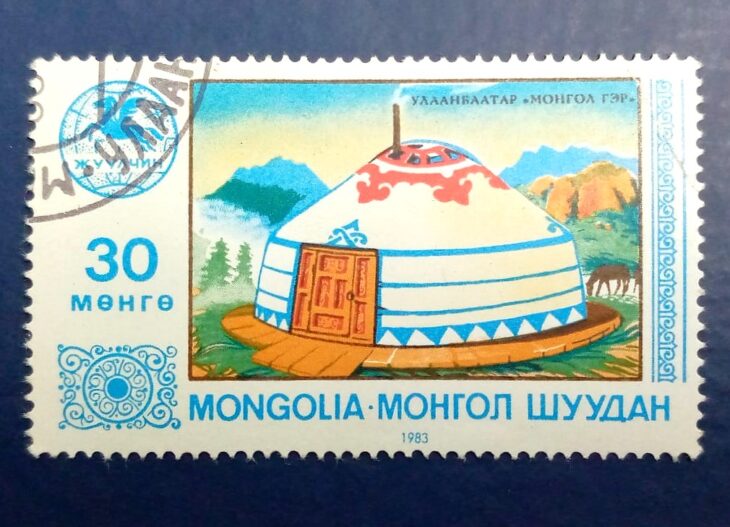
Issue: Mongolia (Yurt) History and Traditions 1983Stamp
Type: Stamp
Number of Stamps: 1
Denominations: 30 Möngöm
Issue Date: 1983
Issued By: Mongolia Post
Traditional Mongolian Skin Tent
The traditional Mongolian tent is closely connected with the country’s nomadic heritage. Known today as a ger or yurt it has served as a practical home for generations of families living across the wide Mongolian steppe. Its circular form makes it suitable for the open landscape where strong winds and changing weather can be part of everyday life. The structure can be assembled and taken down which makes it especially useful for a mobile way of living. This design reflects an important part of Mongolia’s cultural identity and shows how traditional architecture developed around the needs of nomadic communities.
A Home Shaped by Nomadic Tradition
A Mongolian ger is more than a simple tent. It is a carefully designed living space with a wooden frame covered by layers of felt or other protective material. The round walls and roof provide a warm interior while the central opening allows light and ventilation. Because the dwelling can be transported it fits naturally with seasonal movement across the grasslands. Families could move between different grazing areas while taking their homes with them. This practical tradition became an important feature of Mongolian life and remains one of the most recognizable symbols of the country. The stamp preserves this traditional form in a simple artistic design.
Mongolia Cultural Heritage on a Stamp
This 1983 issue offers collectors a small window into the traditional lifestyle of Mongolia. The image of the skin tent represents shelter family movement and a close relationship with the natural environment. It also reflects the importance of portable architecture in the history of Central Asian nomadic societies. The design is valuable not only for its visual appeal but also for the cultural story behind it. For collectors interested in architecture history and traditional life this issue provides an interesting example of how Mongolian postage stamps have preserved everyday heritage. The combination of a simple subject and strong cultural meaning gives the design a special place in Mongolian thematic philately.
