
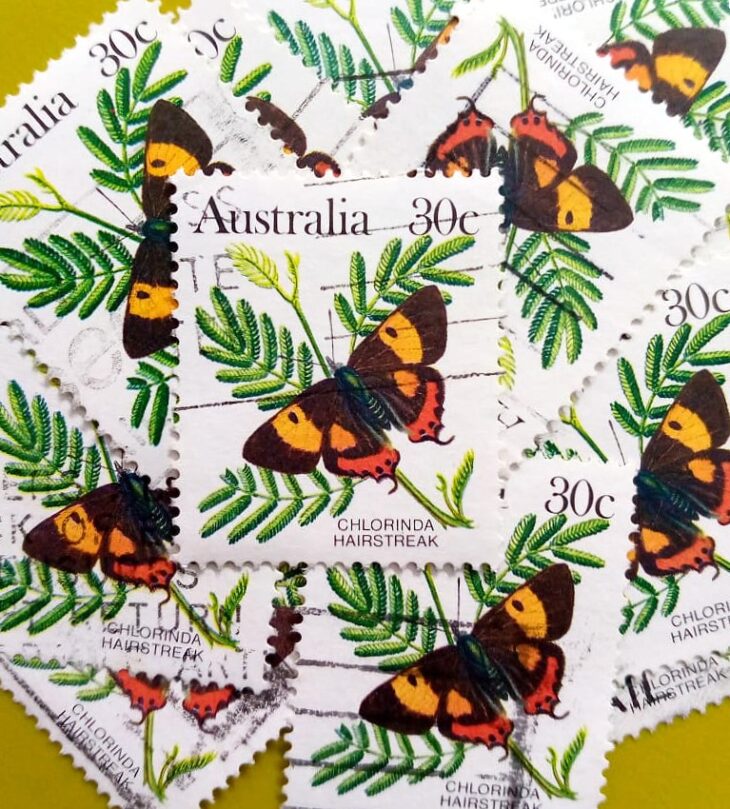
Issue: Australia Chlorinda Hairstreak 1983 Stamp
Type: Stamp
Number of Stamps: 12
Denominations: 30 c,
Issue Date: 1983
Issued By: Australia Post
History and Background:
The Chlorinda Hairstreak stamp was issued as part of a series that celebrated the beauty and diversity of Australian butterflies. The Chlorinda Hairstreak is a delicate species known for its small size and shimmering colors. Found in regions with eucalyptus forests this butterfly plays an important role in pollination and the balance of natural ecosystems. By featuring this butterfly on a stamp the Australian postal service highlighted the importance of conservation and appreciation of native wildlife. The 1983 issue also aimed to raise public awareness about the fragile beauty of insects that often go unnoticed but are vital to the environment.
Design and Features:
The design of the stamp captured the fine detail and vibrant hues of this butterfly. The artist presented the butterfly with its wings spread to show the intricate patterns and colors that make it unique. The background was kept simple to ensure the butterfly remained the central focus of the image. This design reflected both artistic beauty and scientific accuracy making the stamp appealing to collectors as well as nature lovers. The careful illustration allowed people to see the butterfly up close even if they had never encountered one in the wild. It was a perfect example of how postage stamps can combine education with art.
Value and Legacy:
For collectors the stamp is treasured as part of thematic collections on butterflies insects and Australian wildlife. Although it is not rare it is admired for its elegance and connection to nature. The legacy of this issue lies in its ability to draw attention to small yet important creatures that are part of the natural world. It reflects the broader role of stamps in teaching about biodiversity and conservation. Today the Chlorinda Hairstreak stamp remains popular among both philatelists and environmental enthusiasts serving as a reminder that even the smallest species can inspire appreciation and care through art on postage.
