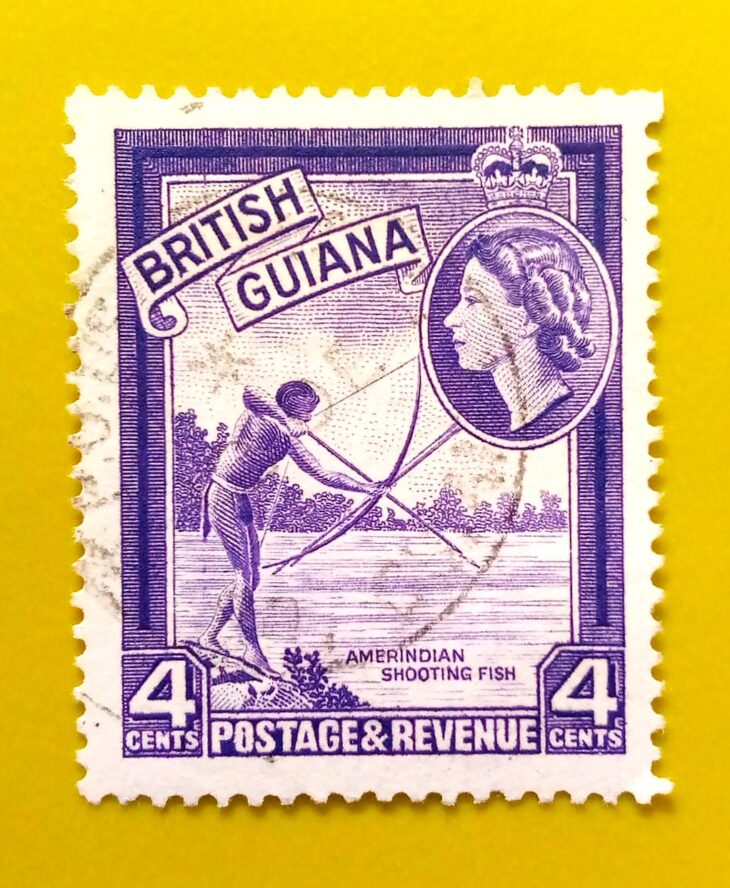
Issue: British Guiana (Guyana) Queen Elizabeth II Amerindian Shooting Fish 1954 Stamp
Type: Stamp
Number of Stamps: 1
Stamps Denomination: 4 c,
Issue Date: 1954
Issued By: British Guiana (British Colony, now Guyana)
Cultural Life Captured in Colonial Art:
The British Guiana Amerindian Shooting Fish stamp is a vivid portrayal of indigenous life in the lush rivers of South America. Issued during the reign of Queen Elizabeth II this stamp forms part of the 1954 definitive series showcasing the natural and cultural identity of the colony. The image features an Amerindian man using a bow and arrow to shoot fish a traditional fishing technique practiced by the indigenous peoples of the region for generations. Set against a backdrop of tropical river scenery the design emphasizes the deep connection between the people and their environment. With Queen Elizabeth II portrait placed at the upper corner the stamp reflects a colonial era where native imagery was blended with symbols of British sovereignty. The result is both ethnographic and imperial, a glimpse into local life framed by global rule.
Colonial Rule Meets Indigenous Identity:
In 1954 British Guiana was still a British colony located on the northeastern coast of South America known for its rich biodiversity and diverse cultures. This stamp was one of several issued to highlight the territory unique heritage and the choice to feature an indigenous fisherman reflects both cultural appreciation and political messaging. The visual contrast between the detailed Amerindian figure and the formal image of Queen Elizabeth II symbolizes the coexistence of traditional life with colonial administration. Though issued under British control the stamp subtly recognizes the significance of local customs and the vital role of indigenous communities in the colony identity. It also served a practical purpose for everyday mail spreading a piece of visual storytelling across the globe with every letter it accompanied.
Philatelic Treasure of Colonial Guyana:
The 1954 Amerindian Shooting Fish stamp is highly valued among collectors of British colonial issues, indigenous themes and South American philately. Its artistic composition historical context and connection to both native culture and monarchy make it a standout item in many collections. Mint condition versions and full sets from the 1954 definitive series are especially sought after. Beyond its postage value the stamp remains a lasting tribute to the traditional skills and natural harmony of Guyana original peoples during a time of political transition and global empire.