
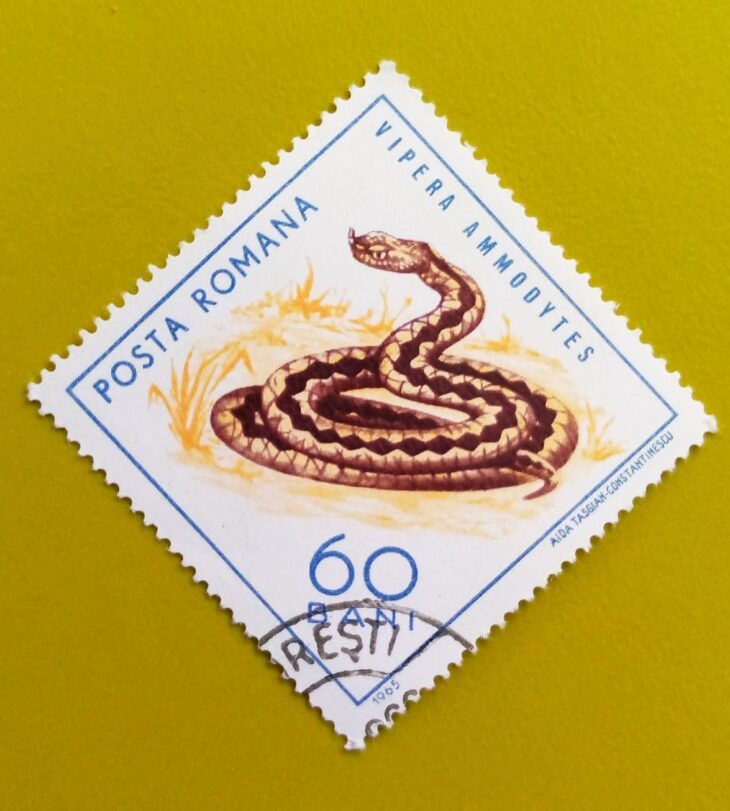
Issue: Romania Vipera Ammodytes (Horned Viper) 1965 Stamp
Type: Stamp
Number of Stamps: 1
Stamps Denomination: 60 Bani,
Issue Date: 1965
Issued By: Romania Post
Horned Viper:
The Romania Horned Viper stamp issued in 1965 is a fascinating example of how nature was celebrated through philately. The stamp shows the Vipera Ammodytes which is also called the horned viper because of the small horn like shape on its nose. This reptile is one of the most striking snakes in Europe and can be found in rocky and dry regions. By placing it on a stamp Romania highlighted its own wildlife and educated people about the animals that live in its landscapes. The detail of the design captures the viper scales and natural beauty making the stamp not just a postal tool but also a miniature work of art. Collectors value this issue because it is both educational and artistic. It connects science culture and philately in one design that continues to stand out even decades later.
Vipera Ammodytes on Romanian Stamp:
In 1965 Romania chose the Vipera Ammodytes as one of the animals to feature in its series of nature stamps. This decision was not only about showing wildlife but also about raising awareness of biodiversity. The horned viper has long been recognized as a powerful symbol of nature with its unique horn and patterned body. Although it is a venomous snake it plays an important role in the ecosystem by keeping balance among smaller animals. The stamp gave people a chance to see and learn about this reptile in a safe and artistic way. Many collectors admire this issue because of its accuracy and elegance. It represents a period when stamps were more than postal pieces they were tools of education and national pride.
Rare Snake Featured on 1965 Issue:
The 1965 stamp of Romania featuring the horned viper remains a favorite for collectors who enjoy nature themes. It is a rare stamp that combines art and science and continues to spark interest among philatelists worldwide. The careful engraving shows the snake sharp details which makes it highly appreciated in collections. For zoologists and collectors alike the stamp stands as a link between natural history and philatelic history. It is not only a collectible but also a reminder of the diversity of life in Romania. This issue proves that stamps can preserve both culture and nature in one small yet meaningful design.
