
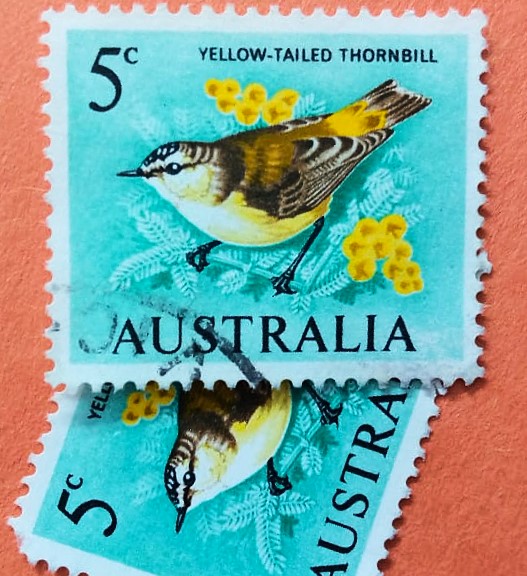
Issue: Australia Yellow-Rumped Thornbill 1966 Stamp
Type: Stamp
Number of Stamps: 2
Denominations: 5 C,
Issue Date: 1966
Issued By: Australia Post
History and Background:
The Yellow-Rumped Thornbill stamp was released as part of the definitive bird series which marked an important change in Australian postage design. This series focused on native bird species that people could easily see in their everyday surroundings. The yellow rumped thornbill is one of the most widespread small birds in the country often found in open woodlands gardens and grasslands. Its bright yellow rump makes it easy to recognize and a delight to observe.
Design and Features
The design of the stamp displayed the delicate features of this small but lively bird. The artwork showed the bird perched calmly with the bright yellow marking on its rump highlighted clearly. The plain background ensured that the details of the bird stood out making the design simple but effective. The artist combined accuracy with elegance so that the stamp appealed to both bird lovers and philatelists. It was one of the first issues to demonstrate how Australian stamps could carry scientific value as well as artistic beauty. This made the yellow rumped thornbill stamp an attractive part of the larger bird series.
Value and Legacy
For collectors the stamp holds lasting appeal as part of the historic 1966 bird definitive series. While it is not a rare issue it has great thematic value for those who collect Australian wildlife or ornithology themed stamps. Its legacy lies in how it represented the everyday birdlife of the nation and showed that even the smallest and most common species deserved recognition. The stamp also symbolized a turning point in Australian philately by shifting attention from formal national symbols to the beauty of nature. Today it continues to be admired by collectors worldwide for its design cultural meaning and connection to the natural world.
