
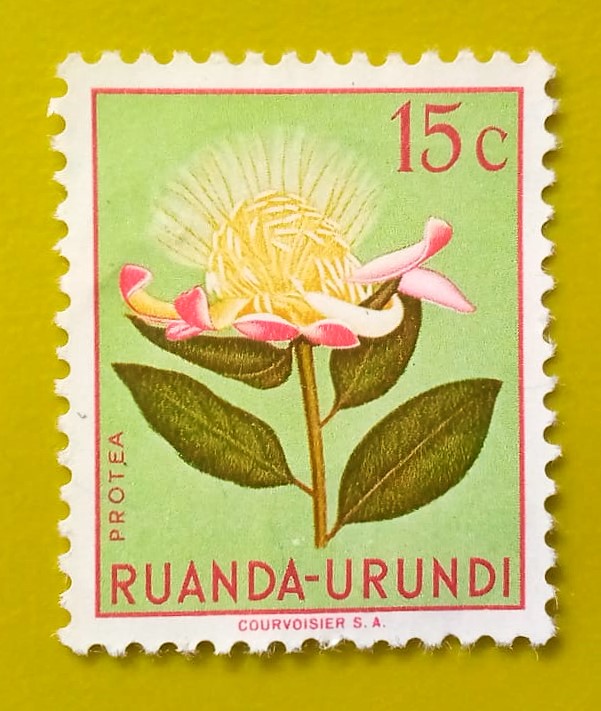
Issue: Ruanda Urundi King Protea 1953 Stamp
Type: Stamp
Number of Stamps: 1
Stamps Denomination: 15 C,
Issue Date: 1953
Issued By: Rwanda Post
Beauty of the King Protea flower:
The King Protea is one of the most striking flowers in the world and its beauty was chosen to appear on a postage stamp from Ruanda Urundi in 1953. This flower is known for its large size and for the shape of its petals that look almost like a crown. It represents strength and uniqueness in nature. By placing it on a stamp the designers of Ruanda Urundi wanted to share the wonder of the natural world with everyone who received a letter. The stamp has a simple yet powerful design that shows the King Protea in full bloom with attention to detail that makes it stand out among other floral issues of the same period.
Ruanda Urundi history connected to Belgian administration:
At the time this stamp was released Ruanda Urundi was under Belgian administration as a trust territory after World War II. The territory had earlier been part of German East Africa but after the war it was placed under Belgian control. Stamps like the King Protea issue were printed and circulated by the Belgian postal system for use in both Rwanda and Burundi before independence. These stamps not only carried mail but also reflected cultural identity and natural treasures of the land. The King Protea issue of 1953 is a good example of how postage was used to display the environment and resources of Africa to the wider world.
Collectors value and meaning of this classic:
Is valued among collectors for its beauty and historical importance. It is not just a piece of paper but also a window into the story of the region before it became two independent countries Rwanda and Burundi in 1962. The flower symbolizes resilience and growth much like the nations that later grew from this territory. Collectors appreciate its fine engraving clear imagery and the way it captures the natural heritage of Africa in a small but powerful format. For many it remains a reminder of both the natural world and the colonial history tied to the region.
