
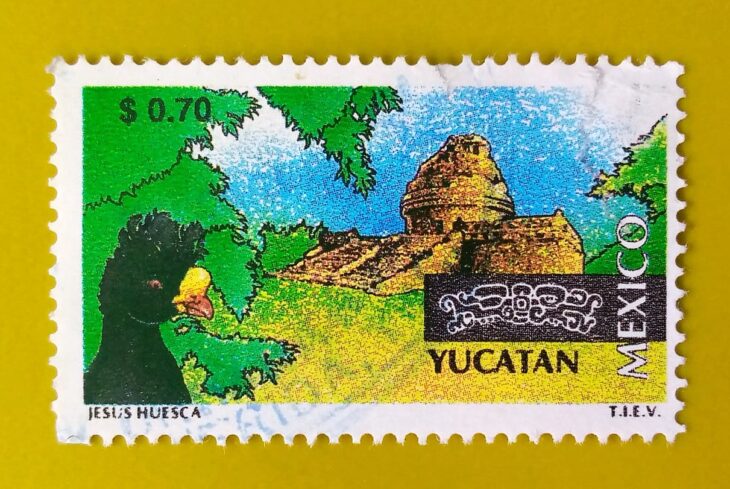
Issue: Mexico (Yucatan) Temple and Great Curassow Bird 1974 Stamp
Type: Stamp
Number of Stamps: 1
Stamps Denomination: 0.70 $
Issue Date: 1974
Issued By: Mexico POST
Ancient Mayan Legacy Shown Through Art:
This 1974 Mexican stamp from the Yucatán series captures the wonder of ancient civilization through vivid illustration. At its center is the famous El Caracol observatory located in the ancient city of Chichén Itzá. This round shaped ruin is believed to have been used by the Mayans for astronomical purposes. The artwork pays homage to the deep roots of Mexico history and the intelligence of its ancient inhabitants. Through precise lines and vibrant colors the stamp shares a visual story of architecture innovation and scientific curiosity that once shaped this region. El Caracol still stands today as a reminder of the knowledge and achievements of the Mayan culture.
Bright Colors Depict Regional Identity:
One of the most striking features of this stamp is its use of bold and rich colors. The stamp is framed with vivid green trees a golden yellow landscape and a brilliant blue sky. It emphasizes the warmth and diversity of Mexico natural environment. The observatory structure is colored in earthy tones that reflect its age and connection to the land. Alongside it stands the Great Curassow bird with its signature black feathers and bright yellow orange beak. These colors represent not just aesthetic appeal but the soul of the region and its people. The artwork by Jesús Huesca brings together culture and nature to celebrate the heritage of Yucatán in a meaningful way.
Wildlife and History Share the Spotlight:
In addition to historical architecture the stamp also features a native species the Great Curassow bird known locally for its unique appearance and tropical habitat. It stands in contrast to the ancient ruin behind it symbolizing the continuity of life from past to present. This artistic pairing shows how the natural world and historical heritage coexist and how both are central to Mexico identity. The Great Curassow which lives in Yucatán forests also points to the need for conservation and awareness. With a face value of 70 centavos the stamp was both a tool of postage and a miniature work of education and celebration.
